
Digital Dentures: How Modern Technology Is Changing the Way Dentures Are Made
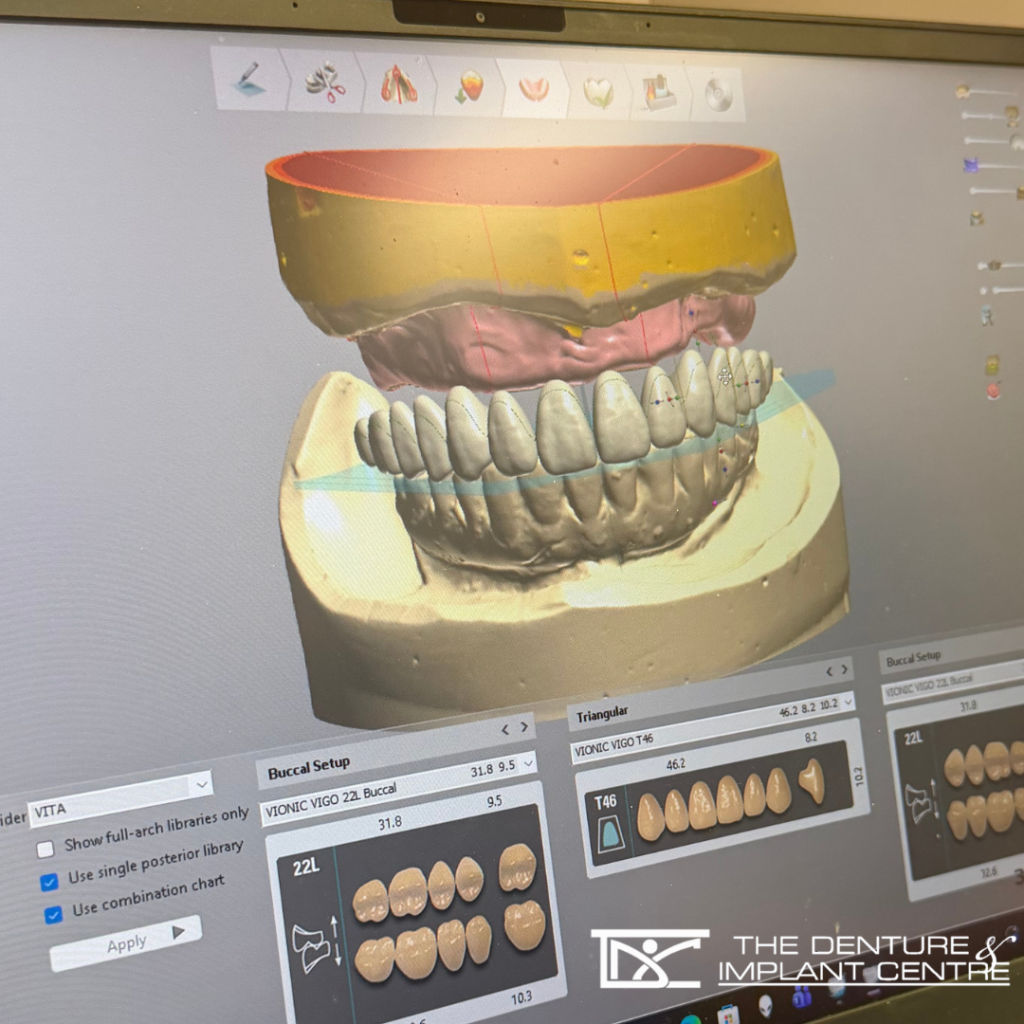
Technology has changed just about every industry, and denturism is no exception!
From digital scans and computer-designed dentures to advanced milling and 3D printing, modern technology is creating new possibilities for how dentures are designed and manufactured.
But what does going digital actually mean for patients? And are there benefits beyond simply using newer technology?
Let’s take a closer look at digital dentures, how they work and some of the ways this technology is changing the denture-making process.
What Are Digital Dentures?
Digital dentures are dentures designed and manufactured using computer-based technology.
The process typically begins with collecting digital records of your mouth. This may involve an intraoral scanner, which captures detailed images of your oral structures, or traditional impressions that are converted into digital records.
Using specialized dental design software, these records can be used to create a customized digital model of your dentures.
Once the design is complete, the denture components can be manufactured using advanced technologies such as 3D printing or milling.
Milling involves cutting the denture from a solid block or puck of specially designed acrylic material, while 3D printing builds components layer by layer using dental resins.
Both methods offer modern alternatives to traditional denture manufacturing techniques.
What Are the Benefits of Digital Dentures?
Digital denture technology offers several potential advantages, not only for the professionals making your dentures but also for the patients wearing them.
Here are a few of the biggest benefits.
- Greater Precision and Consistency
One of the biggest advantages of digital technology is the ability to design dentures using detailed digital measurements.
Computer-aided design and manufacturing can help improve consistency throughout the manufacturing process and reduce certain sources of human error.
This can contribute to a more predictable result and help streamline the process of creating your dentures.
Of course, every mouth is different, and digital technology doesn’t eliminate the need for professional assessments, fittings and adjustments. The experience of your denturist remains an important part of achieving a comfortable, functional result.
- Fewer Adjustment Appointments
Nobody wants to spend more time in the dental chair than necessary!
Because digital workflows can offer greater consistency during certain manufacturing steps, they may help reduce some of the adjustments needed after receiving your dentures.
However, adjustments are still sometimes necessary as your mouth adapts to new dentures or as your oral tissues change over time.
The goal is to combine accurate digital design with professional fitting and follow-up care to help achieve the best possible result.
- Your Digital Records Can Be Saved
This is one of the really interesting benefits of digital dentures!
When your dentures are created using a digital workflow, the design files can often be saved as part of your patient records.
Why does that matter?
Imagine you’ve had your dentures for a few years and accidentally lose them or break them beyond repair.
With traditional manufacturing methods, replacing your dentures may mean starting much of the process over again, including new impressions and measurements.
If your digital denture records are available and still appropriate for your current needs, the saved design may allow the denture to be reproduced without repeating every step of the original manufacturing process.
Think of it like having a digital blueprint of your dentures!
It’s important to remember that your mouth can change over time, so a previously saved design may still need to be updated or reassessed before a replacement is made.
- Modern Manufacturing Options
Digital technology opens the door to different manufacturing methods, including milling and 3D printing.
Milled dentures are created by cutting a denture from a solid block of material, while 3D printing uses a layering process to build components.
Each method has its own applications, and the most appropriate option depends on the type of denture being made and the individual treatment plan.
These technologies allow denturists and dental technicians to incorporate modern manufacturing techniques into their work while continuing to rely on their professional knowledge and experience.
What Does This Mean for the Future of Dentures?
Digital technology is continuing to evolve, and the denture industry is becoming increasingly advanced.
From improved design software to more sophisticated milling and printing equipment, these developments are creating new opportunities for customization, efficiency and consistency.
At The Denture & Implant Centre, we’re proud to incorporate modern technology into our in-house laboratory, including our PM7 milling machine.
This allows our team to digitally design and mill certain denture components right here in our clinic.
We believe that combining modern technology with hands-on experience and personalized patient care is an important part of moving the industry forward.
Are Digital Dentures Right for Everyone?
While digital dentures offer some exciting advantages, they aren’t necessarily the right solution for every patient or every situation.
The best approach depends on your oral health, the type of denture you need and your individual circumstances.
Whether your dentures are created using traditional techniques, digital technology or a combination of both, the most important thing is achieving a comfortable, functional result that meets your needs.
Interested in Learning More About Digital Dentures?
Technology is changing the way dentures are made, and we’re excited to be part of that evolution!
If you’re considering new dentures or simply curious about the latest advancements in denture technology, our team at The Denture & Implant Centre would be happy to answer your questions.
Book a consultation and let us help you explore the options available for your smile.